
IMPORTANT: Please note that the BIOFIRE® FILMARRAY® 2.0 System is being obsolesced in the United States for clinical use. For more information, please refer to the notice below.
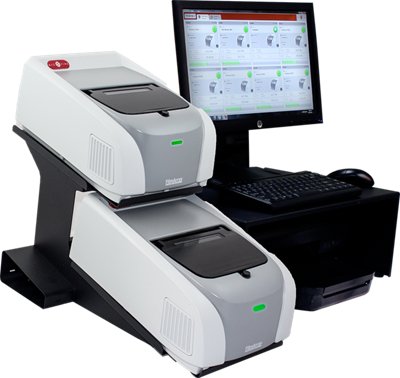
BIOFIRE® FILMARRAY® 2.0 System
The BIOFIRE 2.0 System enables simplified test ordering, faster turnaround times, and increased accuracy by minimizing manual data entry.
Obsolescence Information:
bioMérieux has begun the obsolescence process for the BIOFIRE 2.0 System. Sales have been discontinued as of December 31, 2023, and we will no longer support reagent utilization on the BIOFIRE 2.0 System after January 10, 2029.
Any technical complaint involving a pouch run on a BIOFIRE 2.0 System will still be registered; however, bioMérieux will no longer provide corrective solutions or technical answers for these complaints.
We encourage your to upgrade to the BIOFIRE® FILMARRAY® TORCH System which is built on established BIOFIRE technology and is fully compatible with the same panels used on the BIOFIRE 2.0 System.
The BIOFIRE FILMARRAY 2.0 System – How It Works
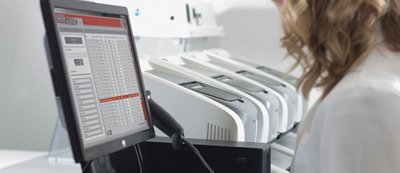
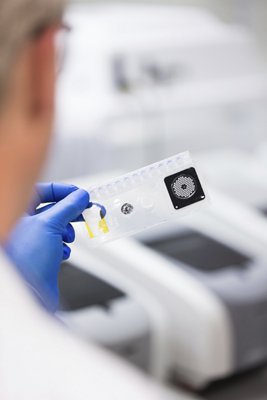
The BIOFIRE 2.0 System offers ease-of-use with just two minutes of hands-on time and results in about an hour. Training is minimal and the software walks you through the entire molecular testing process.
- Results in About an Hour: All of the BIOFIRE syndromic molecular panels can be completed in about an hour. Faster results may lead to shorter length of stay, may reduce downstream diagnostic testing, may improve antimicrobial stewardship, and may improve infection control practices—all of which may lead to better patient satisfaction.1-7
- User-Friendly Multiplex PCR: Any tech on any shift can use the BIOFIRE System, which requires minimal training and hands-on time to help optimize laboratory productivity 24/7.
- Large Syndromic Testing Menu: One test on the BIOFIRE System simultaneously targets the most likely causes of infection, empowering clinicians to choose the right test, the first time. Results are pathogen-specific, clinically relevant, and can lead to more informed patient management decisions. Over 170 targets across eight FDA-cleared panels, providing comprehensive answers while minimizing the need for send-out tests.
Product availability varies by country. Consult your bioMérieux representative.
Service & Support
With the urgent nature of patient and community care, we take pride in addressing all concerns quickly and accurately. bioMérieux is dedicated to providing world class customer support 24 hours a day, 7 days a week, 365 days a year.
For assistance please contact our customer technical support team at:
- Email: biofiresupport@biomerieux.com
- Phone: 801-736-6354 option 5
- Toll Free: 1-800-735-6544
To order, contact your regional sales representative or use the following contact information:
- Phone: +1-801-736-6354 x 1502
- Fax: +1-801-588-0507
- Email: CSCFax@biomerieux.com
- International Sales: +1-801-736-6354 x 1536
- Military Sales: 1-801-262-3592
Resources
Technical & Supporting Documents can be found here:
Watch How the BIOFIRE System Works here:
BIOFIRE System - How it Works
BIOFIRE System - How it Works
References:
- Dumkow, L., Worden, J., et. al. Syndromic diagnostic testing: a new way to approach patient care in the treatment of infectious diseases. J Antimicro Chemo. 2021;76(Suppl.3);iii4-iii11. doi: 10.1093/jac/dkab245.
- Walker T, Dumadag S, Lee CJ et al. Clinical impact of laboratory implementation of verigene BC-GN microarray-based assay for detection of gram-negative bacteria in positive blood cultures. J Clin Microbiol 2016; 54:1789–96.
- Buchan BW, Ledeboer NA.Emerging technologies for the clinical microbiology laboratory. Clin Microbiol Rev 2014; 27: 783–822.
- Graf EH, Pancholi P. Appropriate use and future directions of molecular diagnostic testing. Curr Infect Dis Rep 2020; 22:5.
- Burillo, A., Candel, F., Canut-Blasco, A. Value of syndromic panels in the management of severe community-acquired pneumonia. Rev Esp Quimioter. 2022;35(Suppl 1):15-20. doi: 10.37201/req/s01.03.2022.
- Axelrad, J., Freeberg, D., et al. Impact of gastrointestinal panel implementation on health care utilization and outcomes. J Clin Microbiol. 2019;57(3):e01775-18. doi: 10.1128/JCM.01775-18.
- Verroken, A., Despas, N., et al. The impact of a rapid molecular identification test on positive blood cultures from critically ill with bacteremia: a pre-post intervention study. PLoS One. 2019;144(9):e0223122. doi: 10.1371/journal.pone.0223122.